
Flagship, meat line
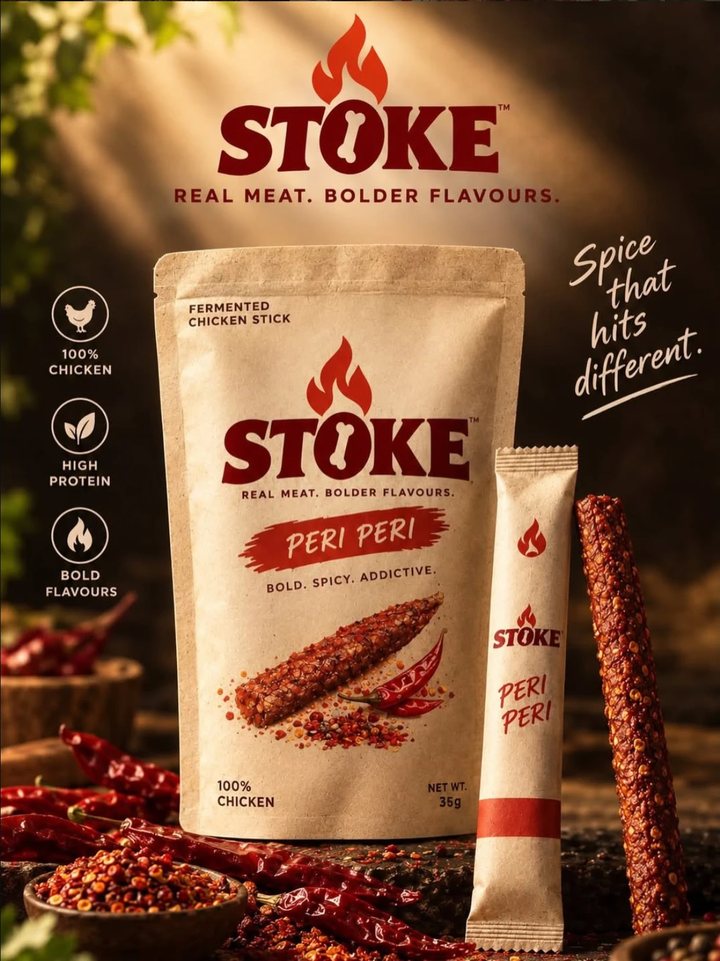
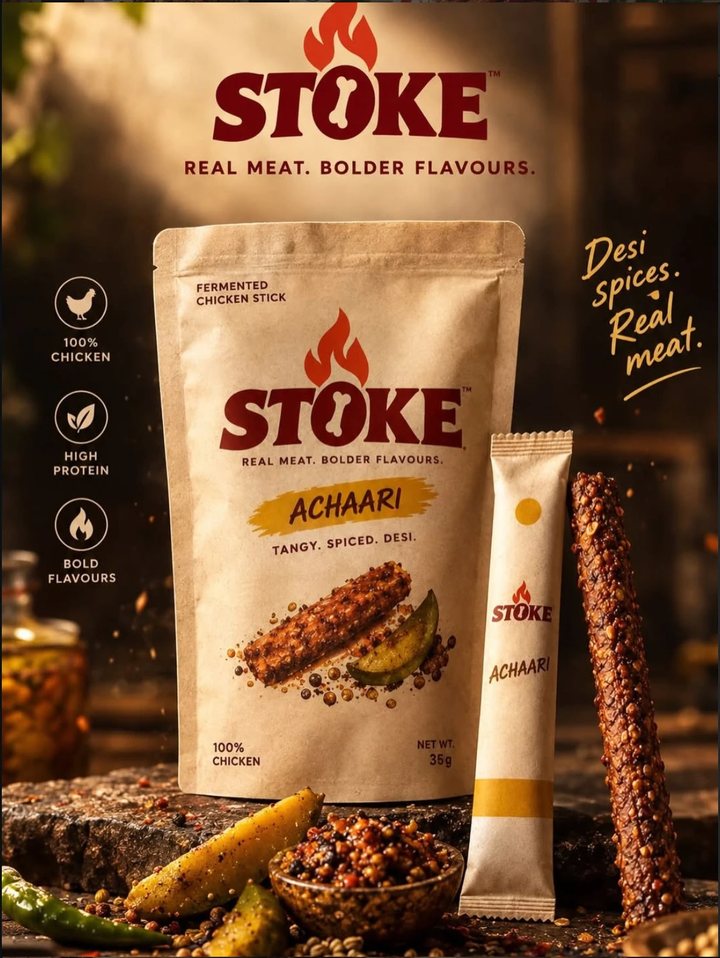
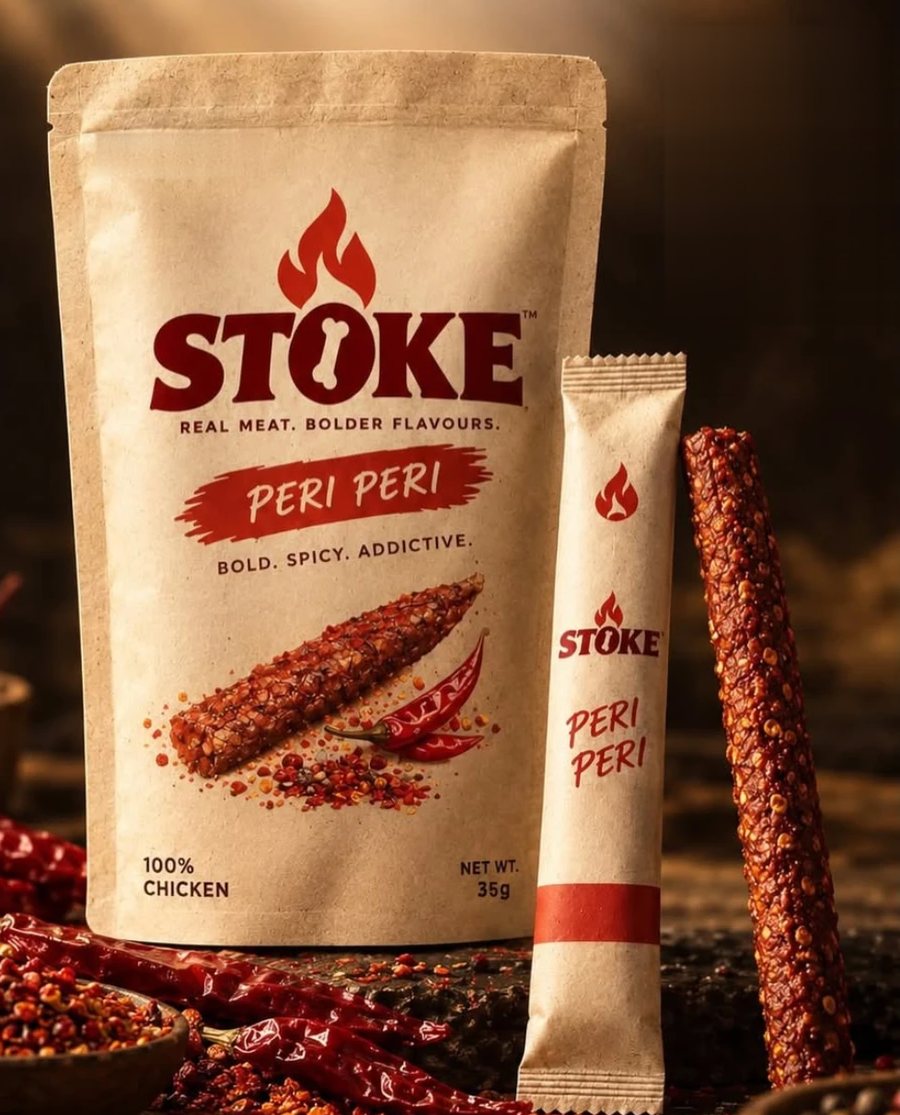
Fermented chicken stick
Real meat. Bolder flavours.
- Protein
- 13.5 g
- Stick
- 35 g
- Single
- ₹110
- Ten-pack
- ₹949
- Peri peri
- Achaari
- Kaali mirch
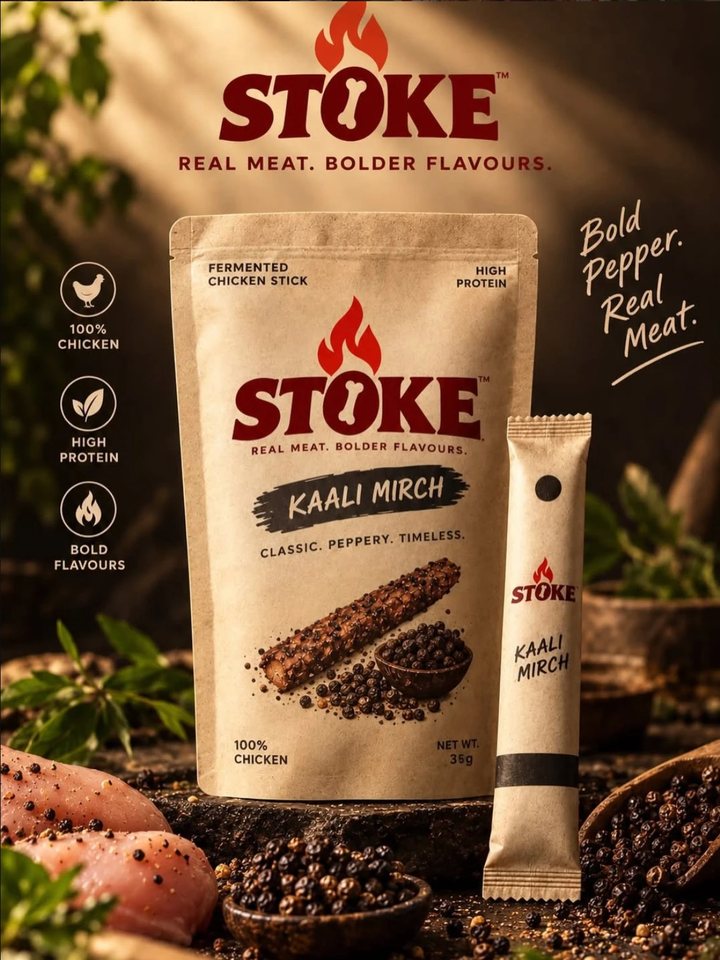
The ten-pack works out to ₹94.90 a stick. Keeps 6–9 months in a drawer, a bag or a glovebox.
STOKE
Slow made.
Fast eaten.
Fermented, high-protein savoury sticks, made in Kolkata. Tender enough to finish, shelf-stable without a fridge.
Room iWhy tender matters
Indian jerky is dried hard, down to around 20% moisture, because that is the easy way to make meat keep. The result is a snack you chew for a long time and buy once. We wanted one you actually finish.
Twelve points of moisture separate a snack people finish from one they abandon.
Dried until it's tough. Keeps well, tires you out.
Stays tender. Still keeps on an ordinary shelf.
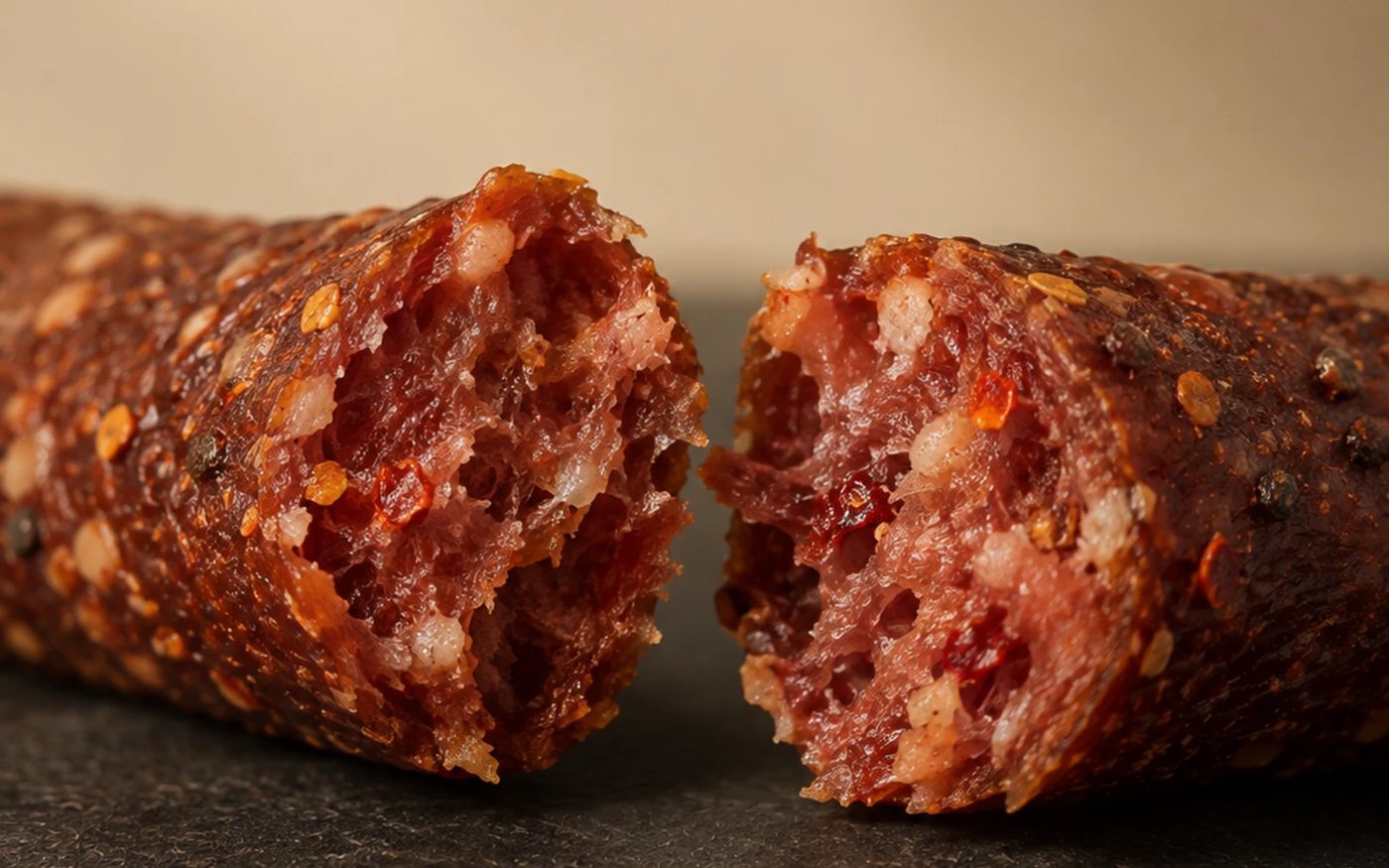
Holding extra water normally means spoilage. Moist meat is exactly what bacteria want, which is why everyone else dries it hard or keeps it cold.
We fixed it in the making, not the marketing. Lactic fermentation plus controlled drying lets the stick keep that moisture and still sit safely at room temperature.
Room iiHow it's made
No single step does all the work. Food scientists call this hurdle technology: stack several gentle barriers so spoilage bacteria can't get over any of them, and the meat never has to be dried to leather.
Live cultures, the same family that sours curd, turn natural sugars into lactic acid. It builds a tangy depth of flavour and makes the meat too acidic for the bacteria we don't want.
pH 5.3 or below
A measured nitrite cure, the traditional salami method, protects against the dangerous stuff and keeps the colour a proper cured red.
Nitrite at 100 ppm
A light salting, then a slow dry in a controlled chamber until water activity drops to 0.83.
Water activity, in plain words: a measure of how much water is free for microbes to use. The rest stays bound in the meat, where it keeps things tender.
2.5% salt, aw 0.83, 32% moisture
Each stick is sealed in a pack that keeps out oxygen and moisture, so what left the chamber is what you open months later.
6–9 months, ambient
Indian meat snacks are dried, smoked or cured. Fermentation is the step that lets STOKE stay soft, and it's the step we've built the company around.
Room iiiThe range
A meat line and a plant line, made with the same cultures, in the same chamber, for the same ambient shelf. India's high-protein shelf is sweet bars and bland legumes. This is the savoury side of it.
Flagship, meat line
Real meat. Bolder flavours.
The ten-pack works out to ₹94.90 a stick. Keeps 6–9 months in a drawer, a bag or a glovebox.

Flagship, plant line
Good food. Bolder days.
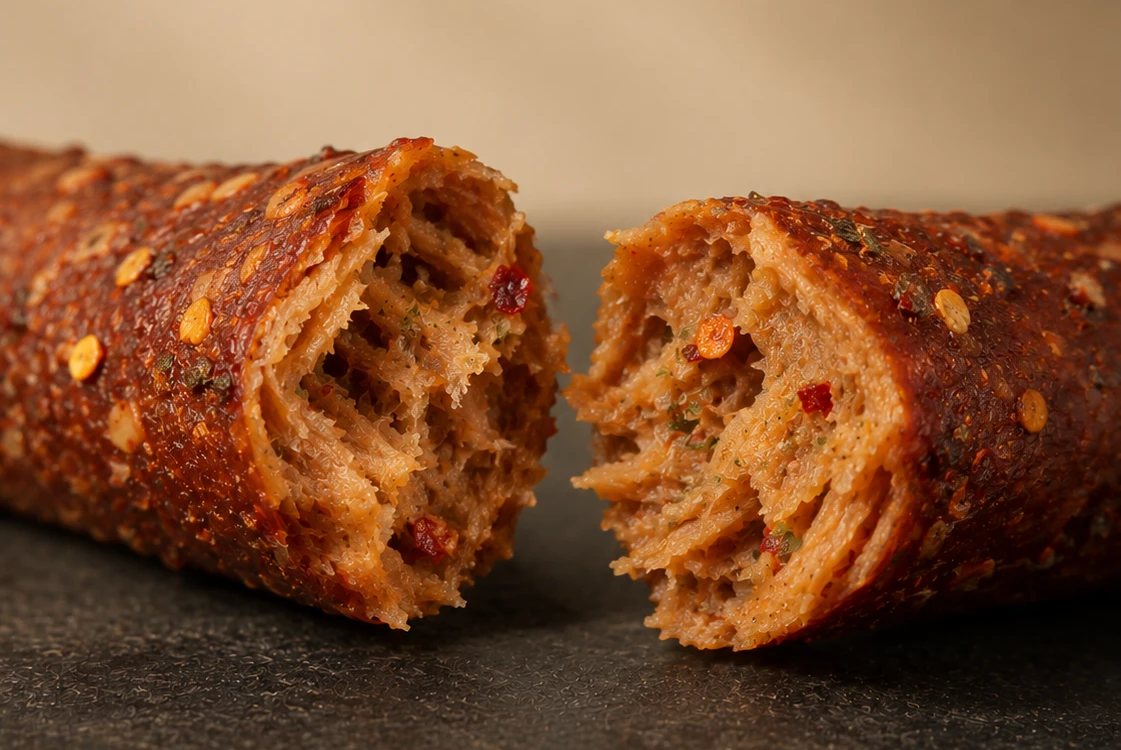
Vegetarian and fermented, made for the same ambient shelf. No fridge, 6–9 months.
Eleven families across both lines. Scroll the hang, or filter by line.
Showing all 11 product families.
Each line runs to 12 SKUs across its families. Protein per serve is shown where it's final; the rest will be published with nutrition panels at launch. Pack photography shows pre-production artwork.
Room ivWhy no fridge matters
6–9months on an ordinary shelf
No refrigeration, at any point. Not at the factory door, not in the truck, not at the shop. STOKE is the savoury, meat-forward, high-protein snack that simply doesn't need a fridge.
That means a kirana counter, a railway platform stall, a hostel room or a site office can stock it the same way it stocks biscuits.
India's cold chain is a fraction of what it needs to be. Anything that has to stay cold is limited to the places those trucks reach.
Each square is roughly 1,000 vehicles. Approximate figures for India's reefer fleet.
In a backpack for a week-long trip, or the glovebox for a long drive. No ice packs.
Any shelf that holds packaged food can hold STOKE. No chiller cabinet, no power bill.
A power cut or a hot afternoon doesn't spoil the stock. The months of shelf life are built in.
Room vWaitlist
We're getting ready to launch from Kolkata. Leave your email and we'll write when the first sticks are ready to ship, and not before.
This is a demo form. Your email was not sent anywhere and nothing has been stored, on a server or in your browser. It disappears when you close or refresh this page.